This country changed its currency on New Year's Day, and this image will now appear on the banknotes instead of the president's portrait.
Syria has issued a new currency, replacing the notes of the Assad regime, which came into circulation on January 1, 2026. Interim President Ahmed al-Shara described it as a symbolic shift in the country's economy. The new banknotes feature symbols of nature such as roses and wheat, instead of images of the Assad family. The currency has also been revalued by removing two zeros.
 Staff Editor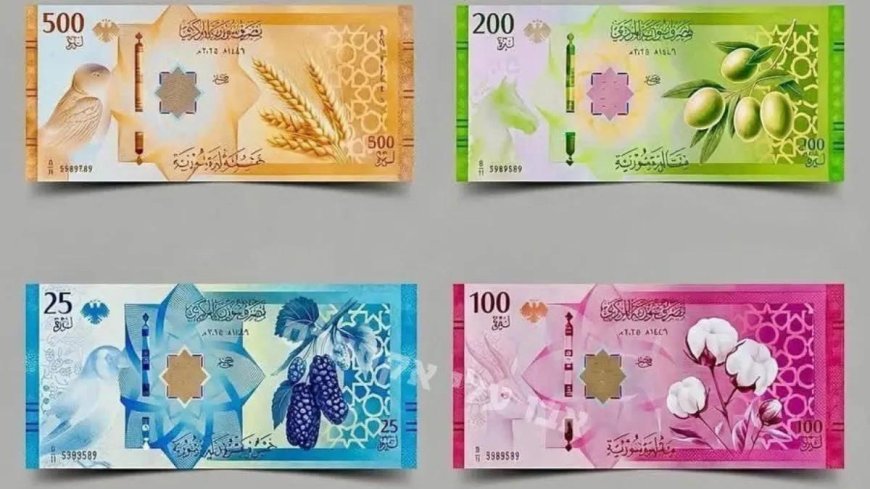
Syria has begun issuing a new currency to replace the notes from the Assad regime era. This is being described as a symbolic and practical shift in the country's economy.
Interim President Ahmed al-Shara and Central Bank Governor Abdul Qader Husrieh unveiled the new notes at a ceremony in Damascus. They went into circulation on January 1, 2026. This is part of broader monetary reforms implemented after the removal of former President Bashar al-Assad's regime in 2024.
New notes feature symbols of nature
President Shara described the newly designed banknotes as a departure from the past, saying they represent a new national identity. The notes now feature symbols of agriculture and nature, such as roses, wheat, olives, oranges, and mulberries, replacing the images of the Assad family that were on the previous notes.
What other changes were made?
A major change involves a redenomination of the currency, with two zeros removed – meaning 100 old Syrian pounds are now equivalent to one new pound. The Central Bank has set a 90-day transition period during which both old and new notes will be accepted, and this period can be extended if needed.
While removing the zeros and changing the design will simplify transactions, officials acknowledged that this change alone will not improve the economy. Shara emphasized that long-term recovery depends on increasing production, reducing unemployment, and strengthening the banking sector.